10 Möglichkeiten, echtes Gold zu erkennen
Let’s cut to the chase: you want to know if that shiny lump you’ve got is the real deal, actual gold. You’re not looking for fairy tales, but practical ways to te…
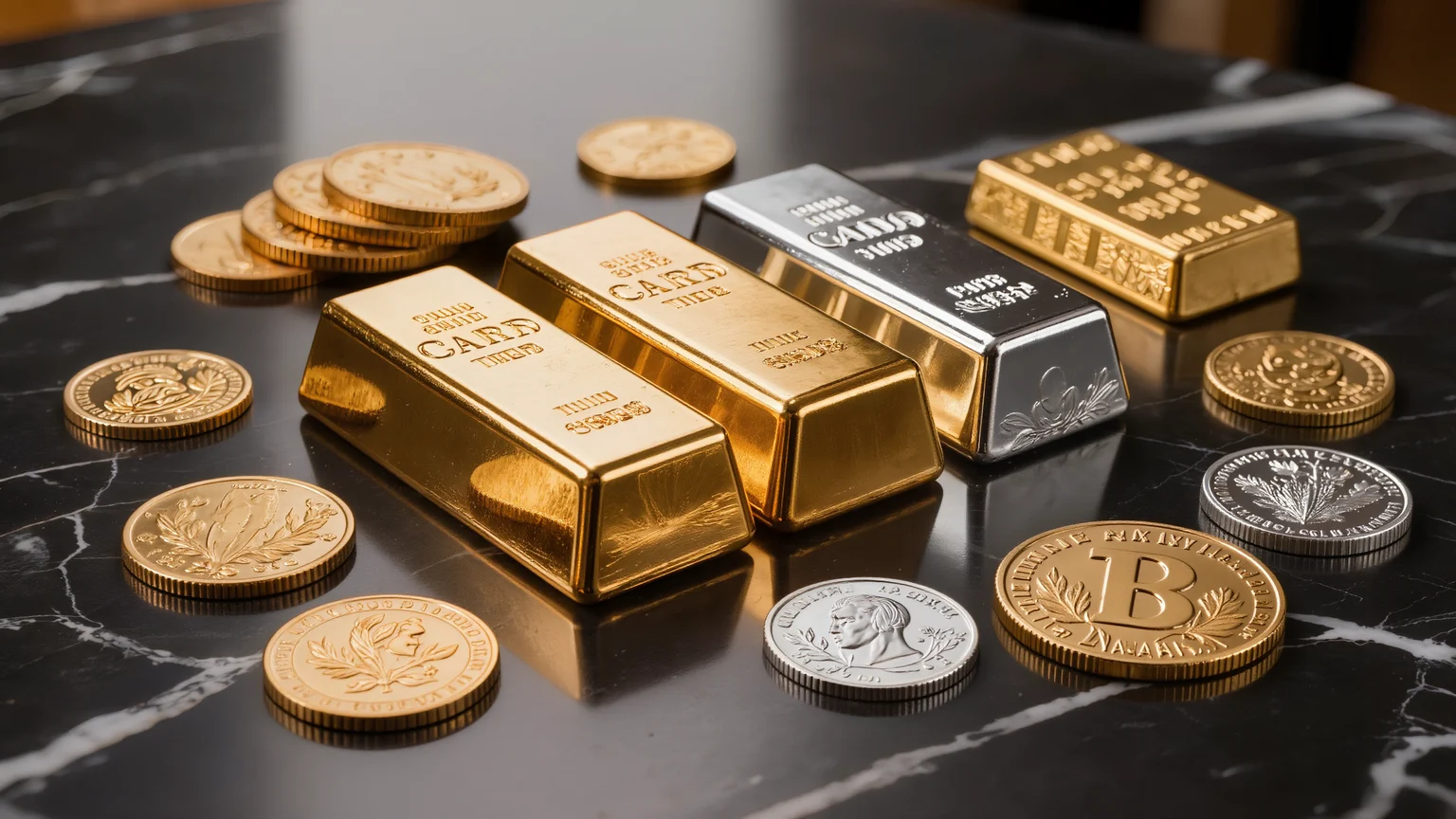
Let’s cut to the chase: you want to know if that shiny lump you’ve got is the real deal, actual gold. You’re not looking for fairy tales, but practical ways to tell. We’ll cover a few methods that you can actually do yourself or with minimal tools, giving you a good shot at figuring out if you’ve struck actual gold or just something that gleams.
Before you go getting out the heavy-duty equipment, there are some simple observations that can give you a strong hint about whether you’re dealing with gold. It’s like a first date for your potential treasure, you notice the immediate vibe.
Visual Inspection: Beyond the Shine
Gold has a distinctive color and luster that’s hard to fake perfectly. Real gold, especially higher karat gold, has a warm, deep yellow hue. Lower karat gold (like 10K or 14K) will look a bit paler, sometimes with a reddish tinge depending on the alloy. If something looks too bright, almost iridescent, or like cheap costume jewelry, it’s a red flag.
Weight and Density: Gold Feels Substantial
Gold is a very dense metal. This means a piece of gold will feel surprisingly heavy for its size compared to most other metals. If you have a piece that looks like it should weigh a fair bit, but it feels light, there’s a good chance it’s not solid gold. Think of comparing a solid gold ring to a hollow brass one. The gold one will have a satisfying heft.
Hallmarks and Stamps: The Manufacturer’s Signature
Many gold items are stamped with hallmarks. These are tiny markings indicating the purity (karat) of the gold and often the manufacturer’s mark. You’ll commonly see things like „10K,“ „14K,“ „18K,“ „22K,“ or „24K.“ For European gold, you might see fineness numbers like „417“ (for 10K, 41.7% gold), „585“ (for 14K, 58.5%), „750“ (for 18K, 75%), or „999“ (for 24K, 99.9%).
- Where to look: Check on the inside of rings, on the clasp of necklaces or bracelets, or on the back of settings.
- What to look for: Use a magnifying glass or loupe to get a clear view.
- Caveat: While marks are a good indicator, they can be faked, especially on older or lower-quality pieces. Don’t rely on them exclusively.
Simple Home Tests You Can Try
These are the DIY methods that don’t require special tools or chemicals. You can perform them right at home with everyday items.
The Magnet Test: Gold Isn’t Magnetic
Gold is not magnetic. This is one of the easiest and most telling tests. Find a strong magnet, a rare-earth magnet (like those used for crafts or some fridge magnets) is best.
- How to do it: Hold the magnet near your gold item. If the item is attracted to the magnet, it’s definitely not pure gold. It’s likely made of iron, nickel, or another magnetic metal, plated with a thin layer of gold.
- What to watch out for: Some clasps might have a hidden steel spring, which would be magnetic. Test the main body of the item. Also, keep in mind that other non-magnetic metals (like copper or silver) can be used to fake gold, so this test only rules out magnetic culprits.
The Ceramic Plate Test: Scratching for Clues
Real gold will leave a gold streak, while fake gold often leaves a black or gray streak. This test involves a bit of compromise, you’ll be slightly scratching your item (or a hidden spot).
- What you need: An unglazed ceramic plate or tile. The rougher and unglazed the bottom of a ceramic object, the better.
- How to do it: Gently rub the gold item across the unglazed surface.
- If it leaves a gold or yellow streak, it’s likely real gold.
- If it leaves a black or gray streak, it’s likely a fake, like pyrite (fool’s gold) or brass.
- Important Note: This test can cause minor scratching, so use it only on pieces you’re willing to risk a tiny bit of wear on, or test a discreet area. Pure 24K gold might scratch the plate lightly and leave a yellowish streak. Lower karat gold might also show a streak, but it might be less pronounced.
The Water Displacement Test: Density in Action
This is a slightly more involved but effective way to gauge density, which is a key characteristic of gold.
- What you need: A scale that can measure small weights (preferably in grams) and a measuring cup with clear volume markings (milliliters). You’ll also need a small bowl or container.
- How to do it:
- Weigh your item: Accurately weigh the item you suspect is gold. Record the weight in grams.
- Measure volume: Fill the measuring cup with a known amount of water (e.g. 100 ml). Note the exact water level.
- Submerge the item: Carefully submerge the item completely in the water. Make sure it’s fully underwater without splashing any out.
- Measure new water level: Note the new water level. The difference between the original and new water level is the volume of the item in milliliters (1 ml = 1 cubic centimeter).
- Calculate density: Density = Mass / Volume. So, divide the weight of your item (in grams) by its volume (in milliliters) to get its density.
- What you’re looking for:
- Pure gold (24K) has a density of approximately 19.3 g/cm³.
- 18K gold is around 15.2bis15.9 g/cm³.
- 14K gold is around 12.9bis14.6 g/cm³.
- If your calculated density is significantly lower than these values, it’s probably not solid gold. For example, if a piece feels heavy but its density calculation is closer to lead (11.3 g/cm³) or brass (around 8.4-8.7 g/cm³), it’s likely a plated item.
More Advanced (But Still DIY-Friendly) Tests
These methods require a bit more specialized equipment, but they are still within reach for the dedicated hobbyist.
The Acid Test: The Gold Standard for Purity
This is the most common test used by jewelers, and you can get DIY acid test kits. It involves using specific acids to determine the karat of gold.
- What you need: A gold testing kit. These kits typically include a testing stone (a piece of polished black slate), a set of nitril acid solutions (each calibrated for a specific karat usually from 10K to 22K), and instructions.
- How to do it:
- Scratch the item: Rub the item you want to test on the testing stone to leave a visible streak of metal.
- Apply acid: Apply a drop of the acid solution corresponding to the karat you suspect the item to be onto the streak. For example, if you think it’s 14K, use the 14K acid.
- Observe the reaction:
- If the streak remains unchanged: The gold is at least that karat purity or higher.
- If the streak dissolves or fizzes: The gold is of a lower karat than the acid used, or it’s fake.
- Repeat with lower karats: If the 14K acid didn’t dissolve the streak, try the 10K acid. If the 10K acid doesn’t dissolve it, then your gold is likely 14K or higher. You can repeat this with higher karat acids to narrow down the exact purity.
- Important Precautions:
- Ventilation: Work in a well-ventilated area. The acids can produce fumes.
- Safety Gear: Wear gloves and eye protection. These acids can cause burns.
- Test inconspicuous areas: Always perform the scratch test on a hidden part of the item.
- Kit quality: Ensure you get a reputable kit with clearly labeled acids.
The Electronic Gold Tester: A Non-Destructive Option
These devices offer a way to test gold without scratching or using chemicals, though they are more expensive.
- How they work: Electronic testers use electrical conductivity or a chemical reaction triggered by a probe to determine the karat of gold. You place the probe on the item, and the device gives a reading.
- Pros: Non-destructive, relatively quick, can differentiate between various karats.
- Cons: Can be expensive for home use, requires calibration, and might be less accurate on very small items or pieces with mixed metals. They might also struggle with very thick gold plating.
What About Fool’s Gold and Other Imposters?
It’s crucial to know what you’re up against. Not everything that glitters is gold, and some common fakes are particularly convincing.
Pyrite (Fool’s Gold): The Classic Imposter
Pyrite is a mineral that looks very similar to gold, especially in its raw form. It’s often found in similar geological locations.
- Distinguishing features:
- Hardness: Pyrite is harder than gold. It will scratch glass, while gold will not scratch glass.
- Streak: As mentioned in the ceramic test, pyrite leaves a black or greenish-black streak, not a gold one.
- Crystal structure: Pyrite often forms cubic crystals. Gold typically doesn’t.
- Brittleness: Pyrite is more brittle than gold.
Brass and Bronze: Common Plated Imposters
Brass (an alloy of copper and zinc) and bronze (an alloy of copper and tin) are often used to imitate gold in jewelry. They have a yellowish hue.
- How to spot them:
- Magnet Test: They are generally not magnetic, so this test won’t rule them out.
- Weight: They are usually less dense than gold, so they will feel lighter for their size.
- Acid Test: They will react to acid, often dissolving quickly or turning green.
- Tarnish: Over time, brass and bronze can tarnish and develop a greenish or grayish patina, which real gold usually doesn’t.
Gold Plating: The Thin Veil of Deception
Gold plating involves a thin layer of real gold electroplated onto a base metal (like brass, copper, or nickel). This is very common.
- How to identify plating:
- Wear and tear: Look for areas where the plating might have worn off, revealing the base metal underneath. This often happens on high-friction areas like the edges of rings or the links of a chain.
- Weight/Density: If the item is gold-plated, it will be less dense than solid gold because the base metal is much lighter.
- Acid Test: The acid test is very effective here. A weak acid might not penetrate the plating and will show the correct karat, but a stronger acid will reveal the base metal. If you scratch the item on the stone and the streak is visible, but the metal underneath is a different color (e.g. silvery or coppery), it’s plated.
When to Call in the Pros
Sometimes, for valuable items or when you’re unsure, bringing in an expert is the smartest move.
The Jeweler’s Expertise: The Final Word
Professional jewelers have a suite of tools and experience that are hard to replicate at home.
- XRF Spectrometer: This is a high-tech, non-destructive way to analyze metal composition. It uses X-rays to identify elements present in the metal and their percentages, providing an accurate breakdown of your item.
- Assay: For very large amounts of gold or when absolute certainty is required, a government-certified assay office can perform a fire assay, which is the most accurate method for determining gold purity (though it requires melting down a small sample).
- Experience: A good jeweler can often spot fakes based on their feel, patina, and the way the light reflects off the metal, even before using their tools.
Trust Your Gut (But Verify)
While not a scientific method, if something feels too good to be true, it often is. If you’re offered a „gold“ item at a ridiculously low price, especially from an unfamiliar source, proceed with extreme caution and get it tested. Your intuition is a good starting point, but actual tests provide the concrete answers.
FAQs
1. What are some common ways to identify real gold?
Some common ways to identify real gold include conducting a visual inspection for markings or discoloration, performing a magnet test, using a nitric acid test, and checking for the appropriate density and weight.2. How can a person tell if gold is real without using any tools?
One way to tell if gold is real without using any tools is by conducting a visual inspection. Real gold does not tarnish or discolor, so if the item in question maintains its shine and color, it may be real gold.3. What is the nitric acid test and how does it help identify real gold?
The nitric acid test involves applying a small amount of nitric acid to the gold item and observing the reaction. Real gold does not react to nitric acid, while fake gold will produce a green or milky color when the acid is applied.4. Can a magnet test be used to identify real gold?
Yes, a magnet test can be used to identify real gold. Gold is not magnetic, so if a gold item is attracted to a magnet, it is likely not real gold.5. Are there any professional methods for identifying real gold?
Yes, there are professional methods for identifying real gold, such as using specialized equipment like X-ray fluorescence (XRF) analyzers or hiring a professional appraiser. These methods can provide accurate and reliable results for determining the authenticity of gold.Mehr aus Blog

7 Fehler, die Anfänger beim Goldkauf vermeiden sollten
Alright, thinking about dipping your toes into the world of gold ownership? Smart move. Gold’s been a reliable store of value for ages, and for …
10 Dinge, die Sie vor dem Kauf von Goldbarren wissen sollten
Alright, so you’re thinking about dipping your toes into the world of gold bars. Smart move! It’s a tangible asset, a classic way to diversify, …
8 Vorteile von physischem Gold gegenüber Papiergold
You’re probably wondering what the big deal is with physical gold versus all the digital and paper options out there. Simply put, physical gold …