8 Gründe, warum Gold in Krisenzeiten gefragt ist
So, you’re wondering why gold suddenly becomes the talk of the town when things get a bit shaky? It’s a great question, and frankly, it’s not as mysterious as it might seem. …
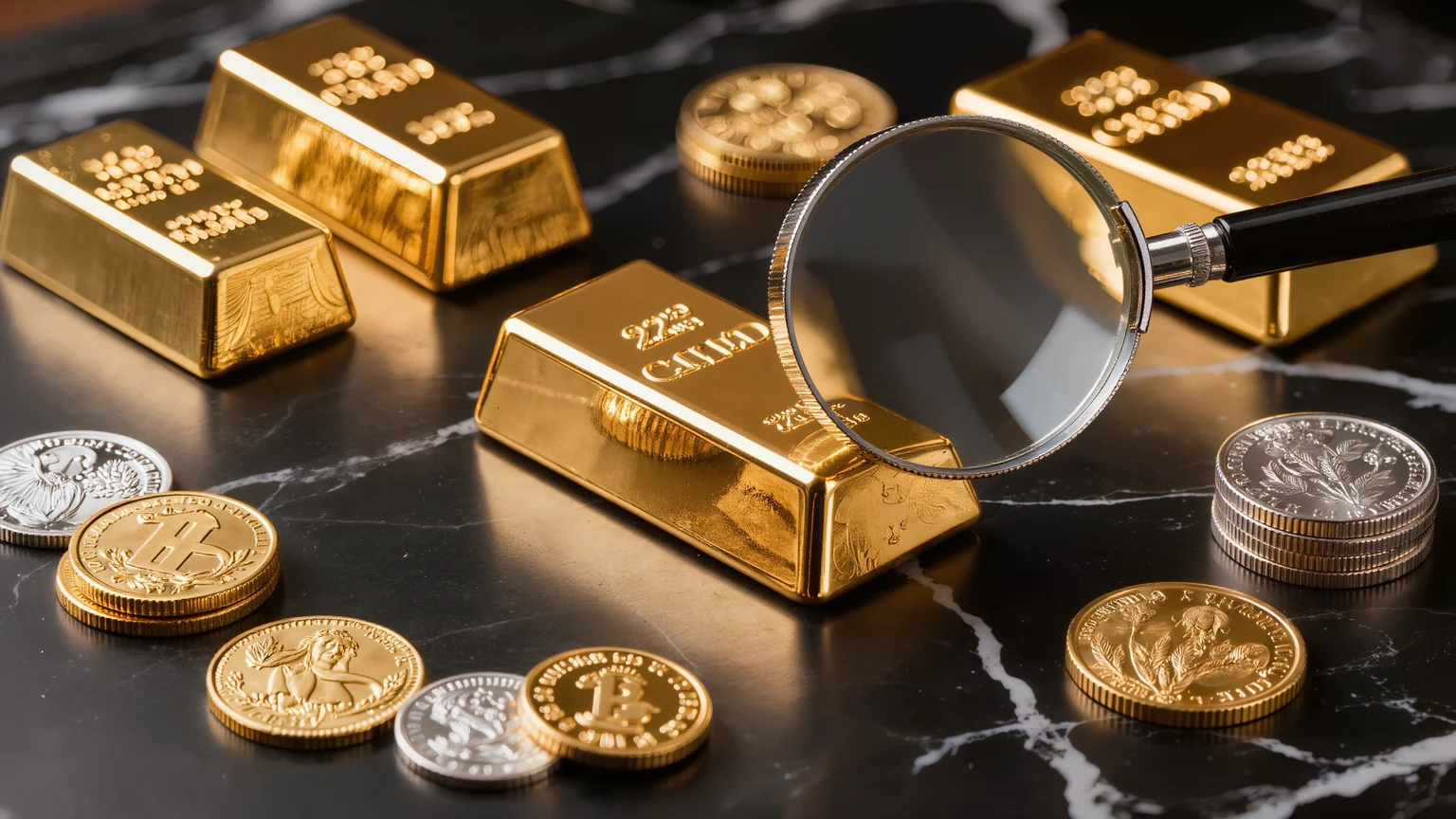
So, you’re wondering why gold suddenly becomes the talk of the town when things get a bit shaky? It’s a great question, and frankly, it’s not as mysterious as it might seem. Gold has this unique way of holding its value when other things are going haywire. Think of it like a reliable old friend who shows up when you need them most. In this listicle, we’ll break down the core reasons why investors and everyday folks alike tend to flock to gold during times of uncertainty.
1. The Ultimate Safe Haven Asset
When economies start sputtering and markets are behaving like toddlers on a sugar rush, investors start looking for a place to park their money that won’t disappear overnight. This is where gold shines. It’s been around for millennia, and people have trusted it as a store of value for as long as we’ve been recording history.
What Makes it „Safe“?
- Historical Resilience: Gold has weathered countless economic downturns, wars, and political upheavals. Unlike currencies that can be devalued by governments or companies that can go bankrupt, gold’s inherent value has persisted.
- Tangible Asset: You can physically hold gold. This tangible nature offers a psychological comfort that assets like stocks or cryptocurrencies, which exist primarily in digital form, can’t always replicate during times of panic.
- No Counterparty Risk: When you own physical gold (like a coin or bar), you don’t have to worry about another party defaulting on their obligations. It’s yours, outright. This is a significant advantage over financial instruments that rely on the solvency of a bank or institution.
Gold vs. Other Assets in a Crisis
- Stocks: Often volatile and prone to steep declines during recessions as company earnings suffer and investor confidence plummets.
- Bonds: While traditionally seen as safe, government bonds can still face risks, especially if the issuing government’s financial stability is in question. Corporate bonds carry even more credit risk.
- Real Estate: Can also decline in value during economic slumps, and selling property quickly in a down market can be challenging and result in significant losses.
The simple truth is, when everything else is up in the air, gold tends to stay put, making it a go-to for preserving wealth.
2. A Hedge Against Inflation
Inflation is that sneaky thief that slowly erodes the purchasing power of your money. When prices for goods and services rise faster than your income, your hard-earned cash buys less and less. This is precisely why gold becomes attractive.
How Gold Fights Inflation
- Gold’s Value vs. Fiat Currency: Unlike paper money (fiat currency), which governments can print more of, increasing its supply and thus reducing its value, gold is a finite resource. This scarcity is a key factor in its ability to retain value.
- Historical Correlation: Historically, gold prices have often risen when inflation rates are high. This is because as the cost of living goes up, the perceived value of a stable, tangible asset like gold increases. Think of it as gold catching up to or outpacing the general price level.
- Central Bank Actions: During inflationary periods, central banks often raise interest rates. While this can eventually curb inflation, it can also destabilize economies and financial markets, pushing investors towards gold as a safe harbor.
Practical Implications of Inflation
- Reduced Purchasing Power: Imagine your grocery bill doubling in a year. That’s inflation impacting your daily life.
- Erosion of Savings: Money sitting in a low-interest savings account during high inflation is actually losing value.
Gold, by its nature, doesn’t suffer from this kind of demand-driven devaluation. Its value is more tied to its intrinsic properties and market demand for its scarcity.
3. Diversification for Your Portfolio
Most smart investors know that putting all your eggs in one basket is a recipe for disaster. That’s where diversification comes in, and gold plays a crucial role in spreading your risk.
Why Diversification Matters
- Reducing Overall Risk: Different asset classes (like stocks, bonds, real estate, and gold) tend to react differently to economic events. When one is down, another might be up, or at least less affected. This smooths out the overall volatility of your investments.
- Gold’s Low Correlation: Gold often has a low or even negative correlation with traditional assets like stocks and bonds, especially during times of market stress. This means that when stocks are crashing, gold might be holding steady or even appreciating.
- Protecting Against Systemic Risk: Systemic risk refers to the danger of collapse of an entire financial system or market. Gold, being outside the traditional financial system for the most part (when held physically), can offer protection against these broad-based failures.
Building a Balanced Portfolio
- Asset Allocation: The practice of dividing an investment portfolio among different asset categories. Gold offers a unique component to this allocation.
- Risk Management: Diversification is a fundamental risk management strategy that aims to minimize potential losses.
- Resilience: A well-diversified portfolio is more resilient and better equipped to weather various economic storms.
Adding gold to your portfolio isn’t just about chasing returns; it’s about adding a layer of security that can help protect your wealth when other investments are under pressure.
4. A Hedge Against Currency Devaluation
Much like inflation, currency devaluation can chip away at the value of your money, especially if you’re holding onto a particular currency that’s losing ground internationally.
How Gold Protects Against Currency Risk
- Global Store of Value: Gold is recognized and traded worldwide. Its value isn’t tied to any single government or economy. This makes it an excellent hedge against the weakening of any specific national currency.
- Flight to Quality: When investors lose confidence in a currency, they often seek out assets perceived as more stable and universally valuable, and gold fits that bill perfectly.
- Dollar Weakness: Historically, when the US dollar weakens, gold prices tend to rise, as investors move away from the devaluing dollar into gold.
Scenarios Where Currency Risk is High
- Political Instability: A country experiencing significant political unrest or a change in government can see its currency lose value rapidly.
- Economic Mismanagement: Poor fiscal policies, high national debt, or unsustainable spending can lead to currency devaluation.
- Geopolitical Tensions: International conflicts or trade disputes can impact currency markets, making them volatile.
- Quantitative Easing: When central banks inject significant amounts of money into the economy by printing currency, it can lead to devaluation and inflationary pressures. This is a direct opposite to gold’s finite nature.
Holding gold can provide a buffer against the erosion of wealth caused by a depreciating currency, acting as a stable global asset.
5. Geopolitical Uncertainty and Instability
When the world feels like it’s on the brink, whether due to international conflicts, political disputes, or major societal shifts, gold tends to attract a lot of attention.
Why Gold Thrives in Uncertainty
- Global Safe Haven: During times of geopolitical tension, borders can become uncertain, trade routes disrupted, and international relationships strained. Gold, being a global, universally accepted asset, becomes a beacon of stability.
- Fear Premium: When fear and uncertainty are high, there’s often a „fear premium“ that gets added to the price of gold. People are willing to pay more for the perceived safety it offers.
- Flight to Tangible Assets: In situations where the stability of financial systems or national economies is questioned, people instinctively gravitate towards tangible assets they can understand and hold. Gold fits this perfectly.
Triggers of Geopolitical Uncertainty
- Wars and Conflicts: Direct military conflicts, especially between major powers, create widespread economic and political instability.
- Trade Wars and Sanctions: Imposition of tariffs or economic sanctions can disrupt global trade and create uncertainty.
- Political Elections & Regimes: Unexpected election results or sudden shifts in a country’s political direction can lead to market jitters.
- Pandemics and Natural Disasters: Large-scale, unexpected events can cripple economies and create a sense of vulnerability, prompting a search for stable assets.
When nations are at odds, or when unforeseen global events occur, gold often acts as a hedge against the unknown, attracting investors who are concerned about the stability of their existing investments.
6. A Store of Wealth Independent of the Financial System
This point touches on a slightly different angle, emphasizing gold’s autonomy from the complex and sometimes fragile modern financial, governmental, or corporate structures.
Gold’s Independence
- Physical Ownership: When you hold physical gold, its value isn’t derived from a promise by a bank or government. It’s derived from its intrinsic properties (scarcity, durability, divisibility) and global demand.
- No Counterparty Risk (for physical gold): As mentioned earlier, unlike bonds or stocks where you rely on an issuer to fulfill an obligation, owning physical gold means you face no counterparty risk. Your gold is yours.
- „Under the Mattress“ Value: During periods of extreme financial crisis, like a bank run or a collapse of a national currency, physical gold can theoretically be stored and used independently of the banking system, retaining its value.
Situations Where Financial Systems Are Compromised
- Hyperinflation: When a currency loses value so rapidly that it becomes almost worthless.
- Bank Failures: The collapse of financial institutions, leading to inability to access funds.
- Capital Controls: Governments sometimes impose restrictions on how much money citizens can move in or out of the country, affecting accessibility of investments.
- Cyberattacks on Financial Infrastructure: While less common, a severe cyberattack could theoretically disrupt digital financial systems.
This independence makes gold a unique asset for those seeking a store of value that’s not directly beholden to the fluctuating fortunes of financial institutions or the policies of individual governments.
7. Intrinsic Value and Historical Significance
Beyond its practical uses as a hedging tool, gold possesses a value rooted in its history and its physical properties that’s recognized across cultures.
The Enduring Appeal of Gold
- Scarcity and Rarity: Gold is a precious metal that exists in finite quantities on Earth. This inherent scarcity is a primary driver of its value. It can’t be artificially manufactured in large quantities like paper money.
- Durability and Malleability: Gold doesn’t corrode or tarnish, making it incredibly durable. It’s also malleable and ductile, allowing it to be formed into various shapes and used in countless applications, from jewelry to electronics.
- Cultural and Religious Significance: For millennia, gold has been associated with wealth, power, divinity, and status in virtually every major civilization. This deep-seated cultural value contributes to its persistent desirability.
- Universally Recognized: Gold is recognized and valued by people all over the world, regardless of their nationality, culture, or economic system. This universal acceptance is a key reason for its status as a global reserve asset.
Applications Highlighting Intrinsic Value
- Jewelry: A significant portion of gold is used in jewelry, appealing to its aesthetic beauty and perceived worth.
- Dentistry and Medicine: Gold is non-toxic and resistant to corrosion, making it ideal for dental fillings and some medical implants.
- Electronics: Its excellent conductivity and resistance to corrosion make it vital in high-end electronics, like connectors and circuit boards, where reliability is paramount.
This intrinsic value, coupled with its physical properties and long-standing cultural importance, gives gold a foundational demand that transcends short-term economic fluctuations.
8. A Hedge Against Market Manipulation
While markets are designed to be efficient, there are always concerns about potential manipulation, especially in complex financial instruments. Gold offers a degree of immunity from some of these concerns.
How Gold Resists Manipulation
- Decentralized Market: The global gold market is vast and comprised of many participants, miners, refiners, jewelers, central banks, ETF providers, and individual investors. This decentralization makes it harder for any single entity to exert overwhelming control.
- Physical Supply and Demand: While paper gold instruments (like futures contracts) can be influenced by speculation, the price of physical gold is ultimately tied to the real-world supply and demand dynamics of the metal itself, which is harder to artificially inflate or deflate long-term.
- Durable and Easily Verifiable: Physical gold is a tangible asset. Its authenticity and weight can be verified, unlike intangible assets that might be subject to complex accounting maneuvers or outright fraud.
- Central Bank Holdings: Major central banks hold substantial gold reserves, which act as a stabilizing force and a check against any single entity trying to drastically manipulate its price.
Concerns About Market Manipulation
- Algorithmic Trading: Sophisticated algorithms can sometimes amplify price swings, creating artificial volatility.
- „Paper Gold“ Markets: Derivatives markets, while providing liquidity, can also be detached from the physical supply and can be subject to large speculative bets.
- Insider Information: In some markets, insider trading can distort prices.
Because the demand for gold is driven by such a diverse range of fundamental factors, from industrial use and jewelry to investment and central bank reserves, and because its ownership is tangible, it presents a more robust defense against widespread price manipulation compared to less tangible or more centralized assets.
FAQs
1. Why is gold in demand during times of crisis?
Gold is considered a safe-haven asset, meaning it is perceived as a stable investment during times of economic or geopolitical uncertainty. Investors often turn to gold as a way to protect their wealth during periods of crisis.2. How does gold perform during economic downturns?
Historically, gold has shown resilience during economic downturns. Its value tends to increase when other assets, such as stocks and bonds, are underperforming. This is due to its perceived stability and store of value.3. What are the factors that drive the demand for gold during crises?
Several factors contribute to the demand for gold during crises, including its status as a hedge against inflation, currency devaluation, and geopolitical instability. Additionally, gold is seen as a tangible asset that can provide a sense of security during uncertain times.4. How does gold compare to other assets during crises?
Gold has historically outperformed other assets, such as stocks and bonds, during times of crisis. Its value tends to remain relatively stable or increase, making it an attractive option for investors seeking to diversify their portfolios and mitigate risk.5. What are some examples of historical crises where gold demand surged?
Gold demand has surged during various historical crises, including the 2008 financial crisis, geopolitical tensions, and periods of high inflation. During these times, investors and central banks have sought to increase their holdings of gold as a way to protect against economic uncertainty.Mehr aus Blog
7 Fehler, die Anfänger beim Goldkauf vermeiden sollten
Alright, thinking about dipping your toes into the world of gold ownership? Smart move. Gold’s been a reliable store of value for ages, and for …
10 Dinge, die Sie vor dem Kauf von Goldbarren wissen sollten
Alright, so you’re thinking about dipping your toes into the world of gold bars. Smart move! It’s a tangible asset, a classic way to diversify, …
8 Vorteile von physischem Gold gegenüber Papiergold
You’re probably wondering what the big deal is with physical gold versus all the digital and paper options out there. Simply put, physical gold …